• Título do Slide

    Escreva sua legenda aqui
    Botão
  • Título do Slide

    Escreva sua legenda aqui
    Botão
  • Título do Slide

    Escreva sua legenda aqui
    Botão
  • Título do Slide

    Escreva sua legenda aqui
    Botão
  • Título do Slide

    Escreva sua legenda aqui
    Botão
  • Título do Slide

    Escreva sua legenda aqui
    Botão
  • Título do Slide

    Escreva sua legenda aqui
    Botão

Multitrophic systems

Multitrophic refers to the relationship between species that occupy different levels of a food chain. In ecology, multitrophic interactions can occur between plants, herbivores, and predators. In aquaculture, multitrophic systems involve the interaction of multiple species in a way that reduces waste and improves sustainability.

These systems can be implemented on land (land-based aquaculture), marine open water (sea-based aquaculture) or freshwater systems, and can comprise various combinations of species, such as fish/algae/bivalve combinations.

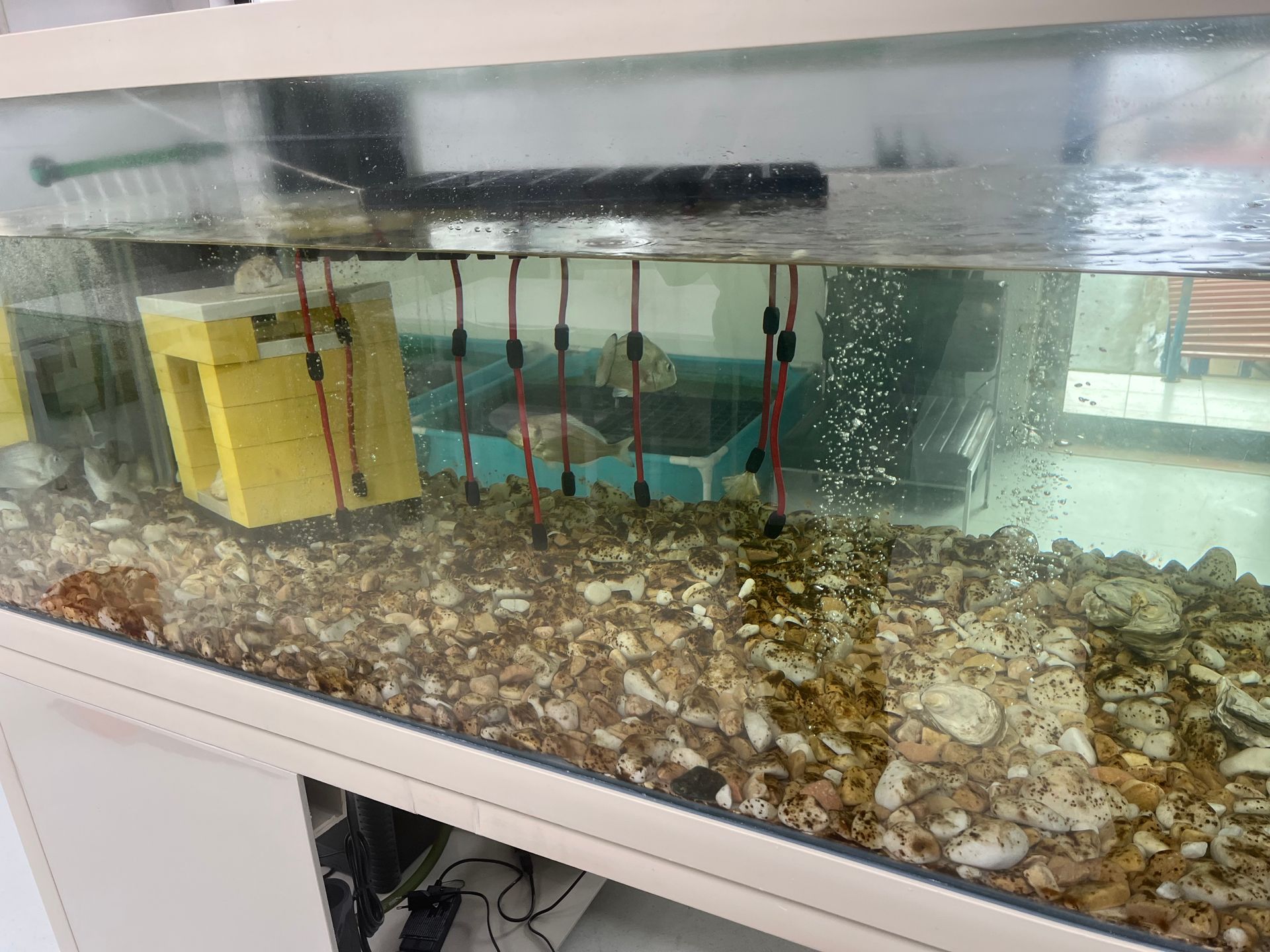
Aquário

Our Aquarium

Since installing our aquarium, we have been conducting indoor tests simulating a natural multitrophic environment, while observing the well-being of the resident animals (Sparus aurata and Craossotea magallana) and the balance of this micro-ecosystem. We are partners with the Fish Etho Group in the AquaReach project, studying animal well being. One theme that this observation raised for us was the concept of Ethology, which we intend to explore further. We imagine the aquarium as an amusement park for the fish residing there, which have effectively gone from an initial state of apparent "stress" and depression to a quite active state of exploring the props we have placed there, with the help of, among other things, 3D printing and Oikum structures.
 Advantages of Multitrophic Systems in Land-based Aquacultures

Space Optimization

- Several species can be produced in the same space;

- More efficient use of resources;

- There is no need for navigation signaling (cultivation structures are not subject to collision with nautical vessels);

- Significant enhancement of the cultivation space (including licensing, water quality and infrastructure);

Quality of prodution
- Possibility of several successive cultivation cycles (monthly, for example) within the space of a year;

- High meat ratio, in the case of shellfish (~30%).

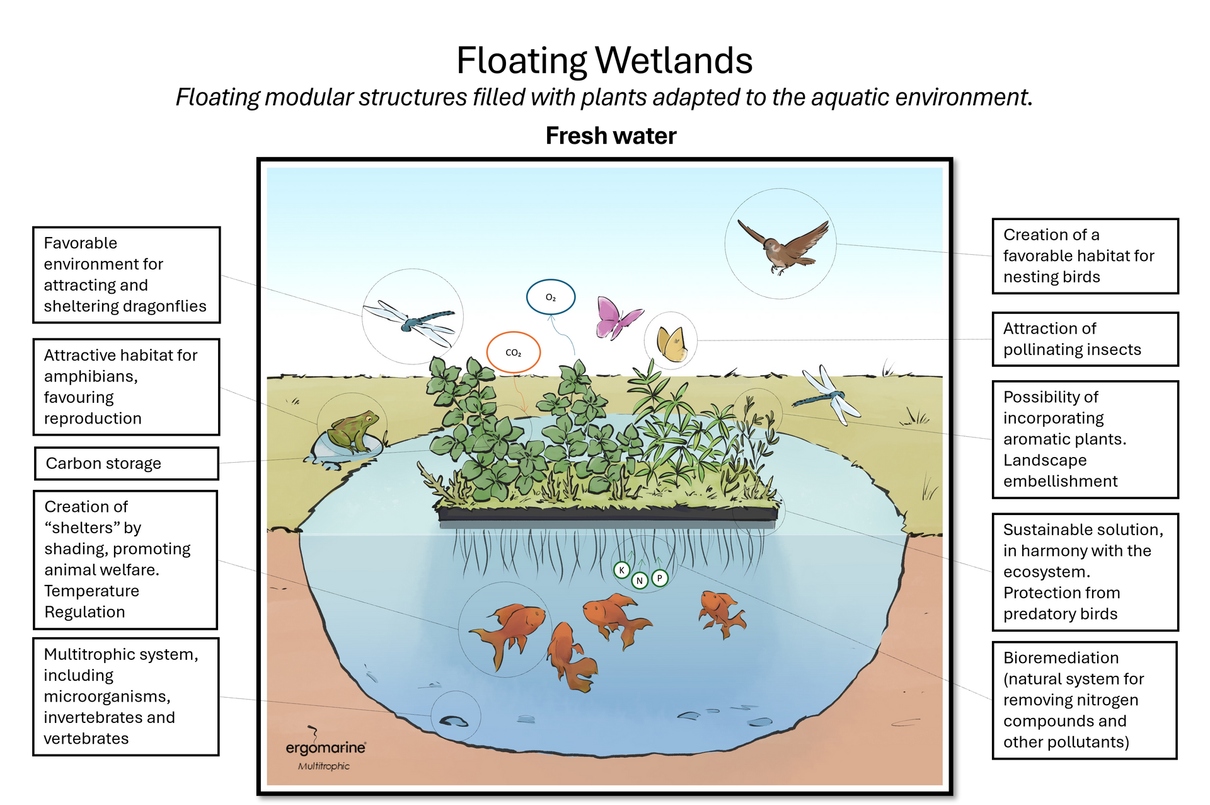
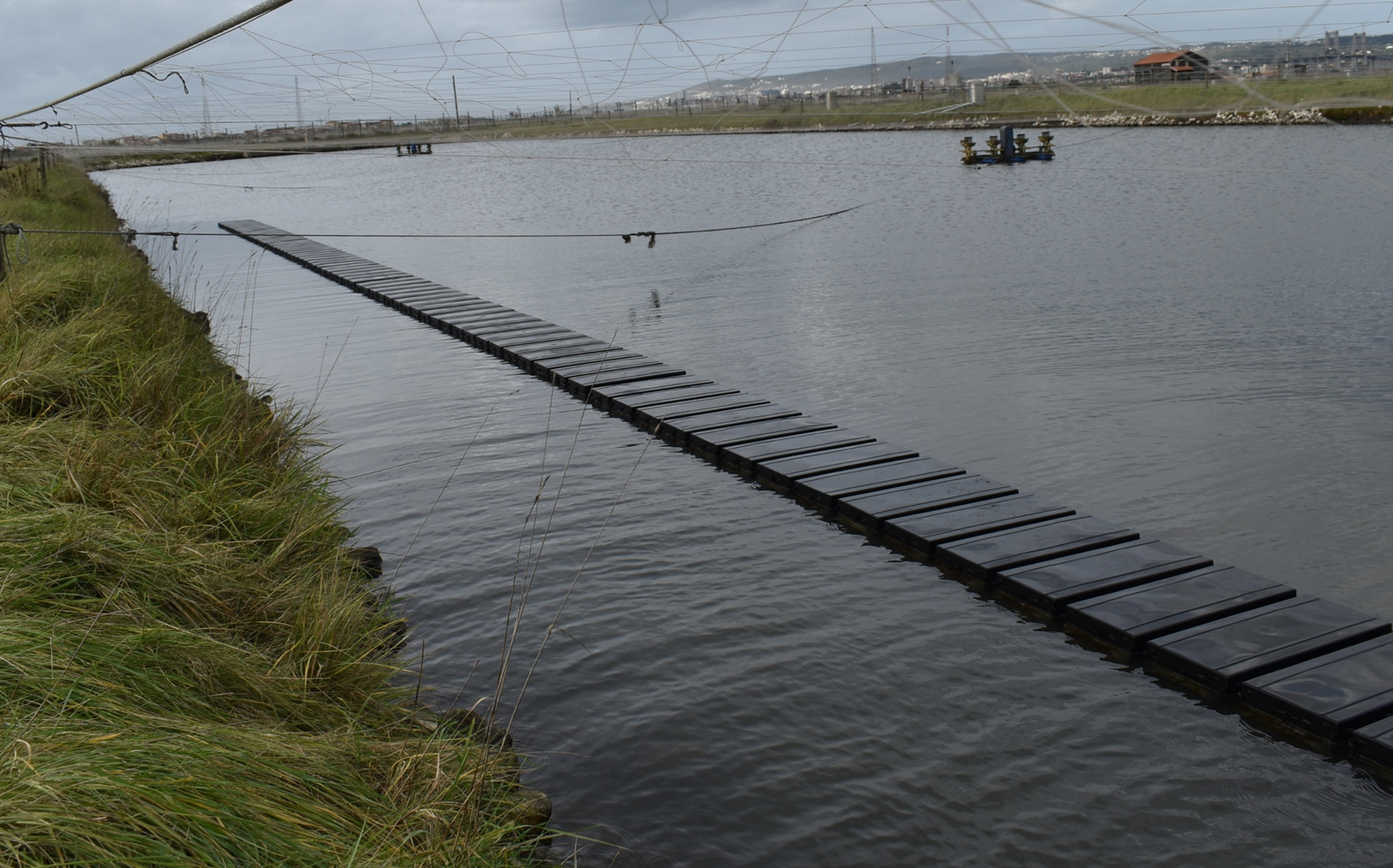
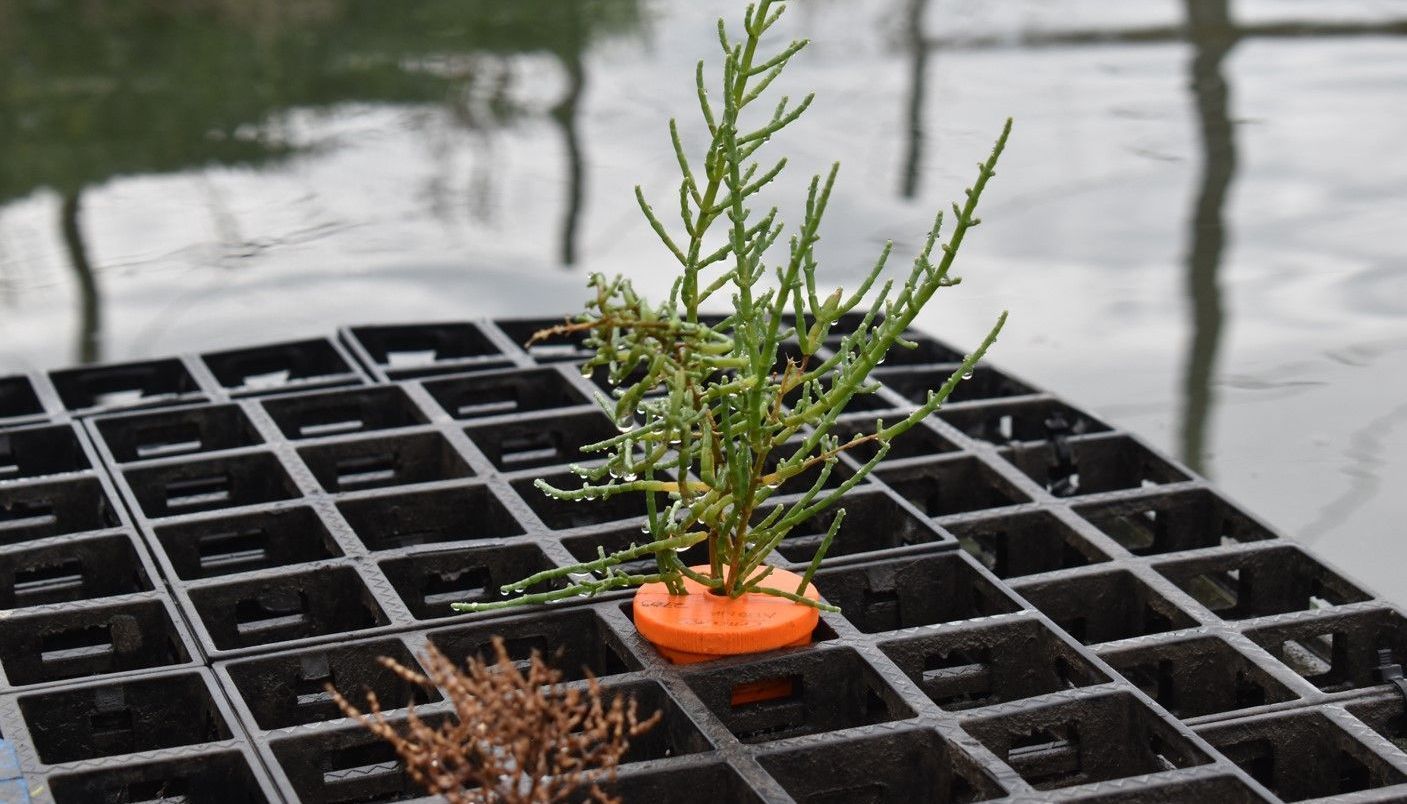
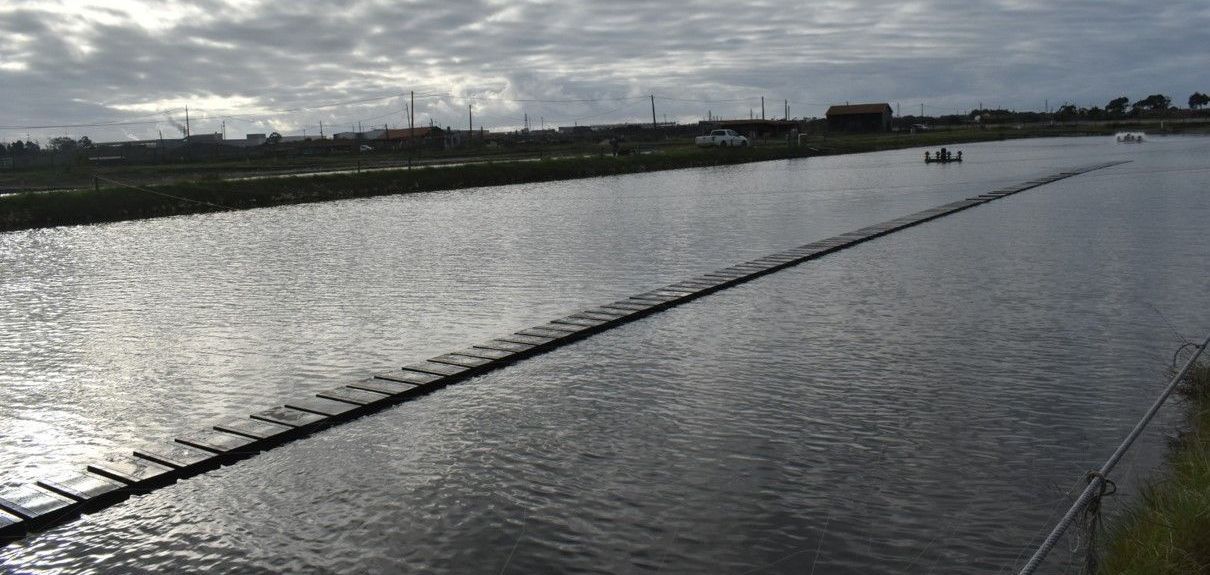
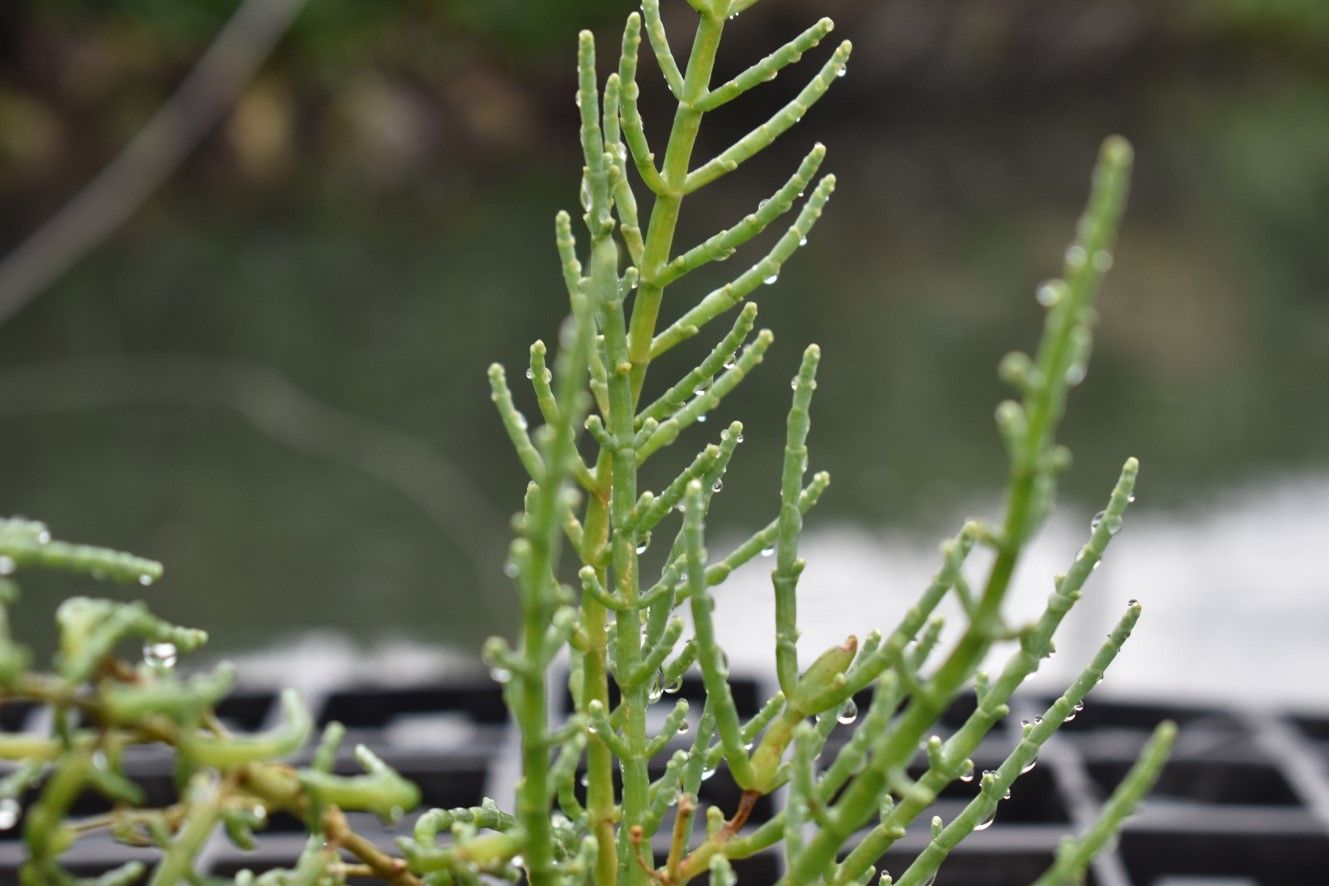
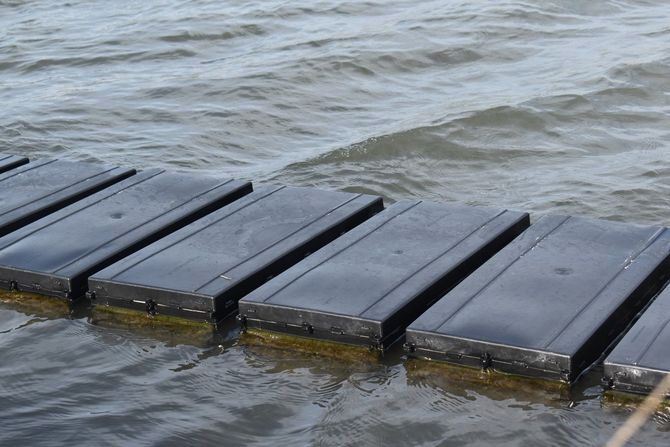
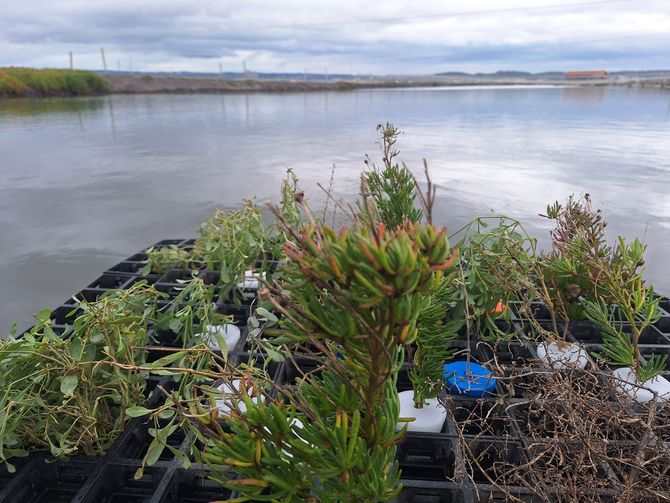
Incorporation of Floating wetlands
- Creation of “refuges” through shading, promoting animal welfare.

- Attraction of other species, such as insects, birds, and amphibians, strengthening trophic relationships.
- Creation of habitats and promotion of biodiversity.
- Creation of partially extention “mini-ecosystems”.

Removal of excess nutrients in the environment
- Reduces water acidification;

-Reduces eutrophication, caused by the accumulation of phosphates and nitrates;

Bioremediation

- Filtration of potentialy fatal chemical compounds, for the survival of marine animals. 

Natural Capital and Ecosystem Services
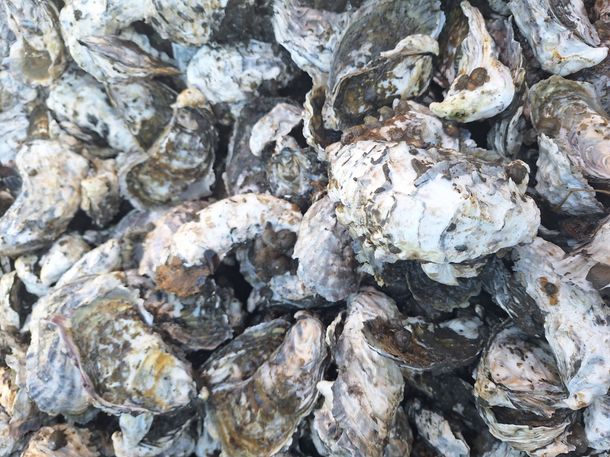
- Contribution to Blue Carbon: Mitigating climate change by retaining carbon in bivalve shells;

- Improvement of water quality, providing a better environment for fish (animal welfare);

- Bivalve shells can later be used as reefs for biodiversity and coastal protection (construction of gabions).

Ergomarine Materials

- Highly resistant, durable and recyclable compounds; - Products easy to handle, turn, transport and tow;

- Creation of ergonomic, safe and autonomous work processes;

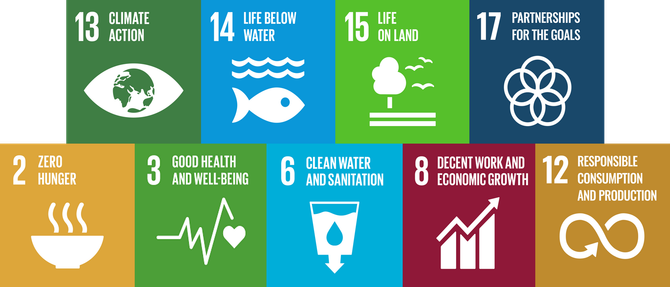
SDGs

- Sustainable aquaculture practices, in line with sustainable development goals.

Circular Economy and Aquaculture

- Waste reduction;

- Dematerialization of the business;

- Offer of delivery service;

- Monitoring of delivered products;

- Continuous contact with the customer, receiving feedback and level of satisfaction

- Recycling and replacement of materials at the end of their useful life.

TUNICATES

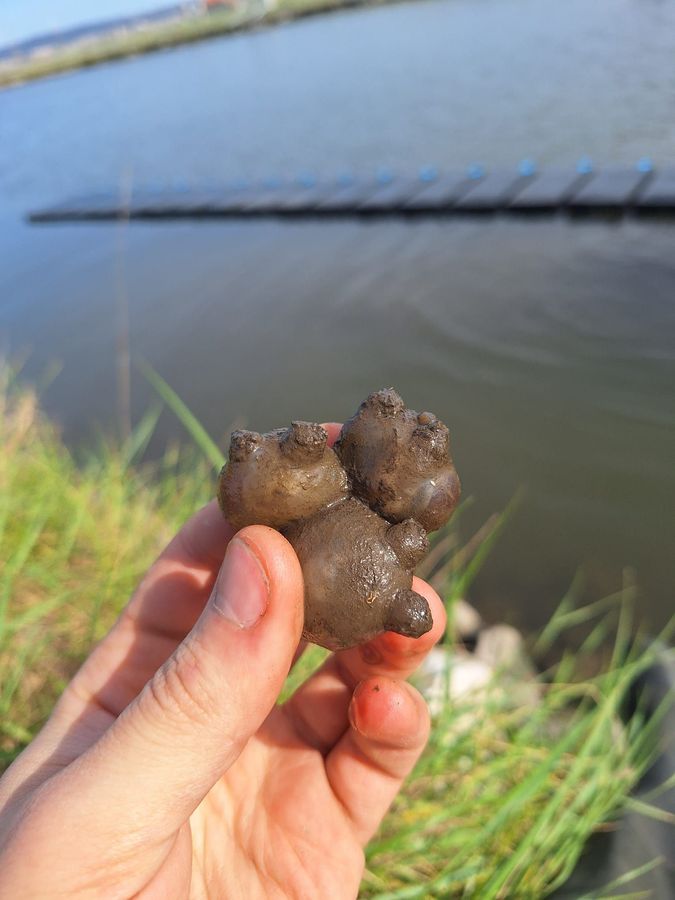
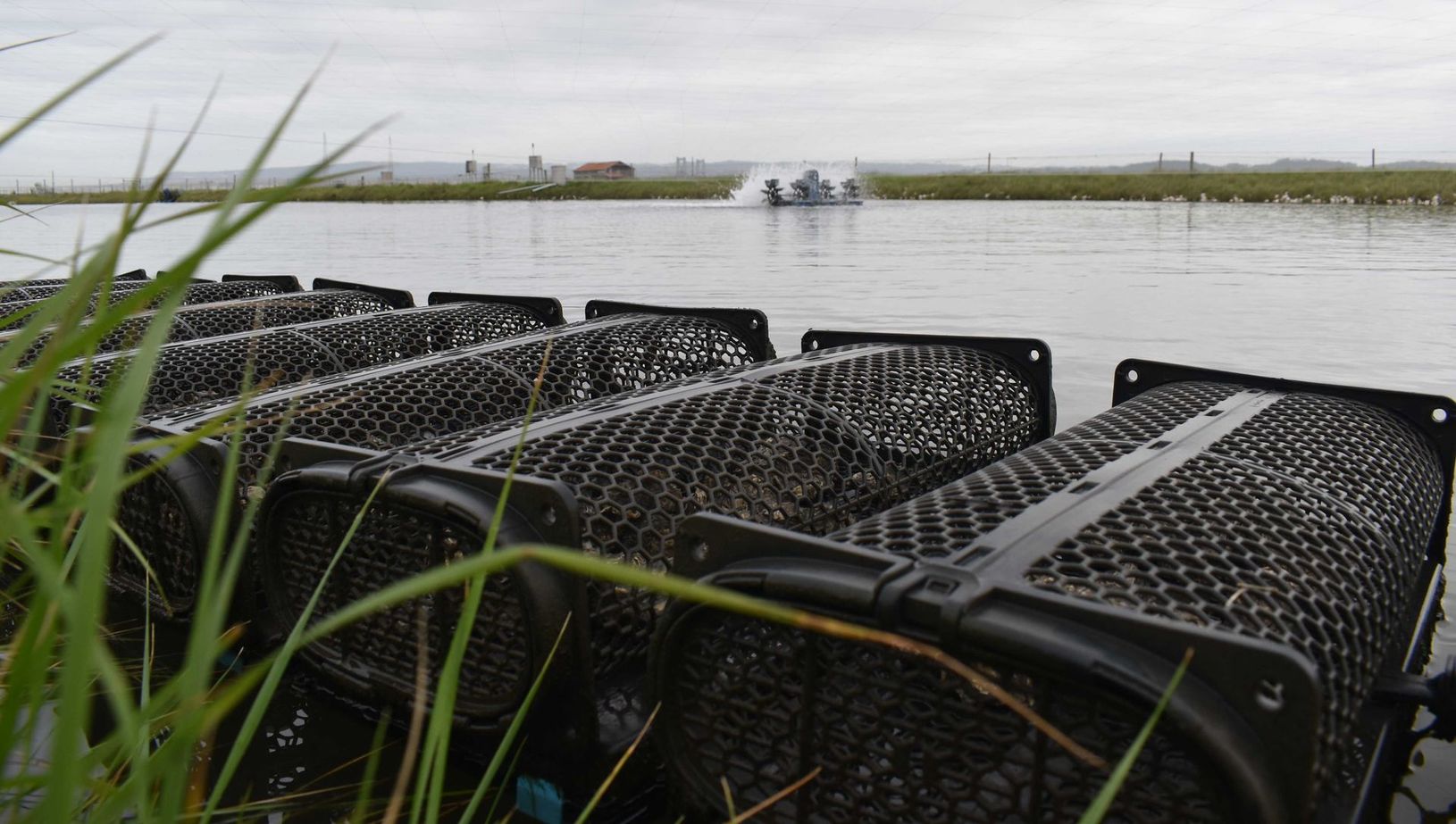
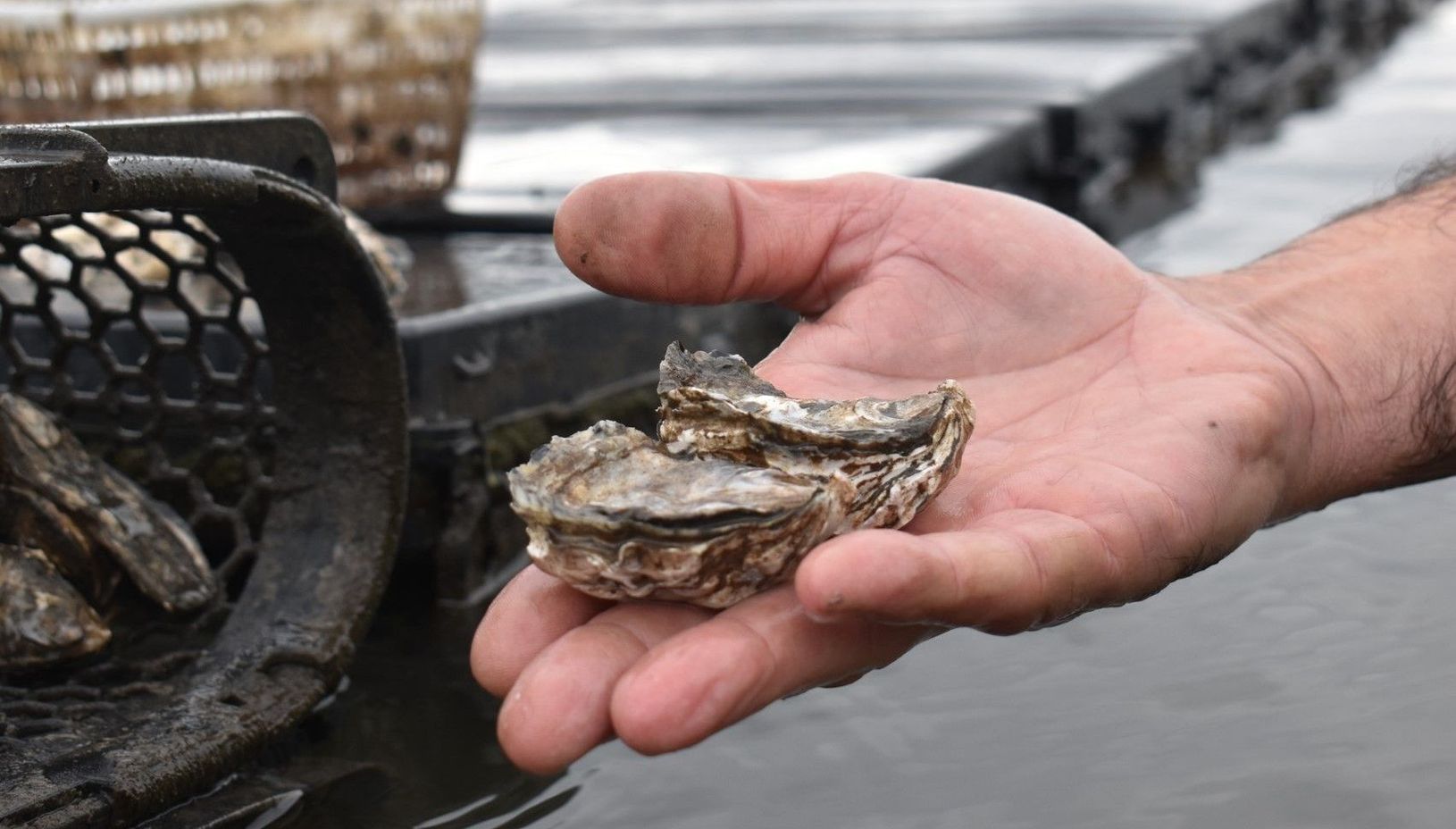
In the course of our experiments for improving our ERGOFLIP system  for oyster farming 08/04/2025), we collected many undesired specimens of Molgula Manhatensis tunicate .

It was noticed that they grow well, together with the oysters.

Tunicates are low trophic filtering creatures that can well complement our search for added multitrophic biodiversity (although they may compete with oysters).

Tunicates, filterers, are ideal for biorremediation and against eutrophisation. They feed not only from phytoplancton, but also the suspended food particles of fish food.

They can immediately be used as an aditional high quality food for fish or used for medicin or human food aditives.

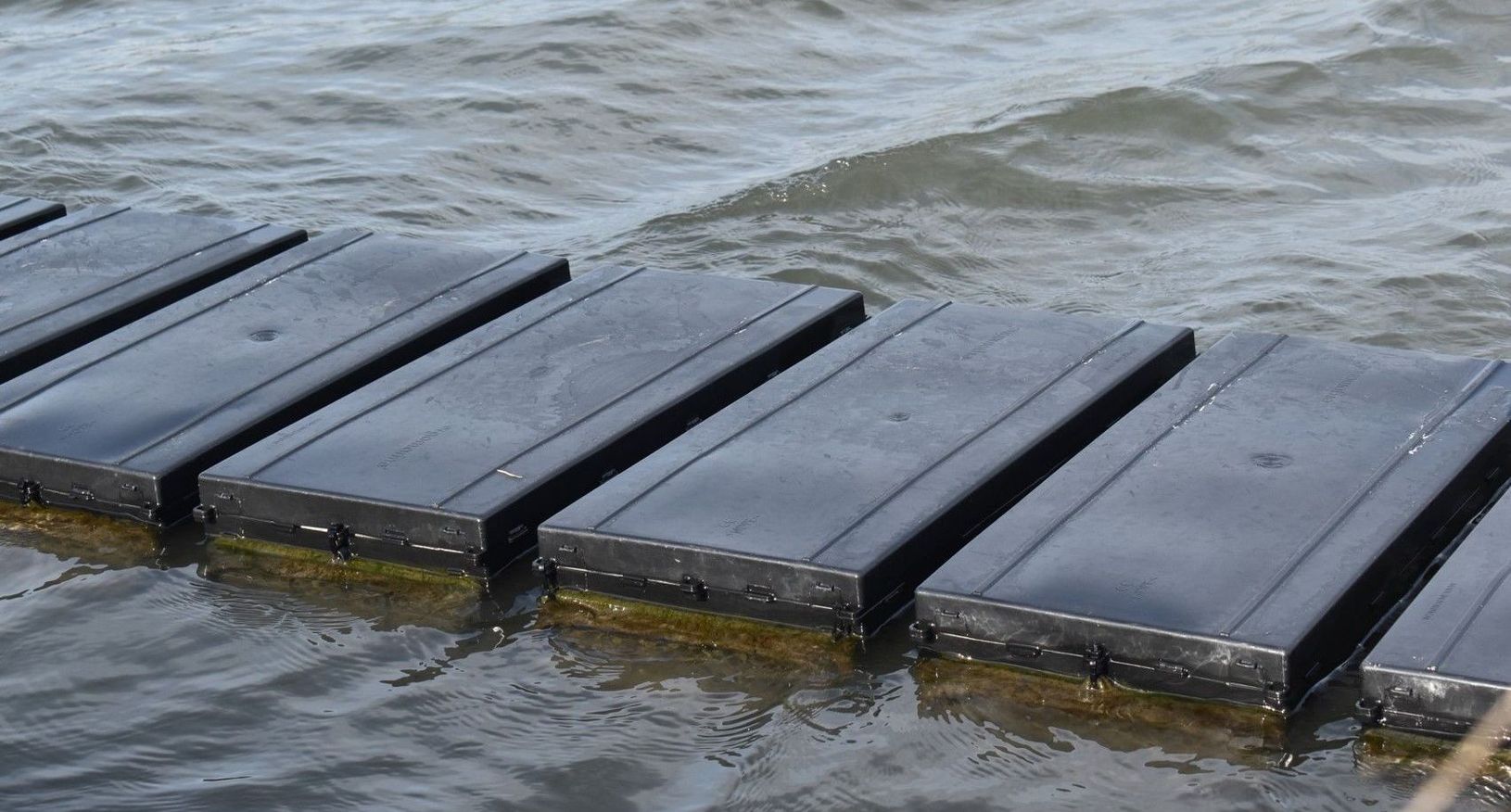
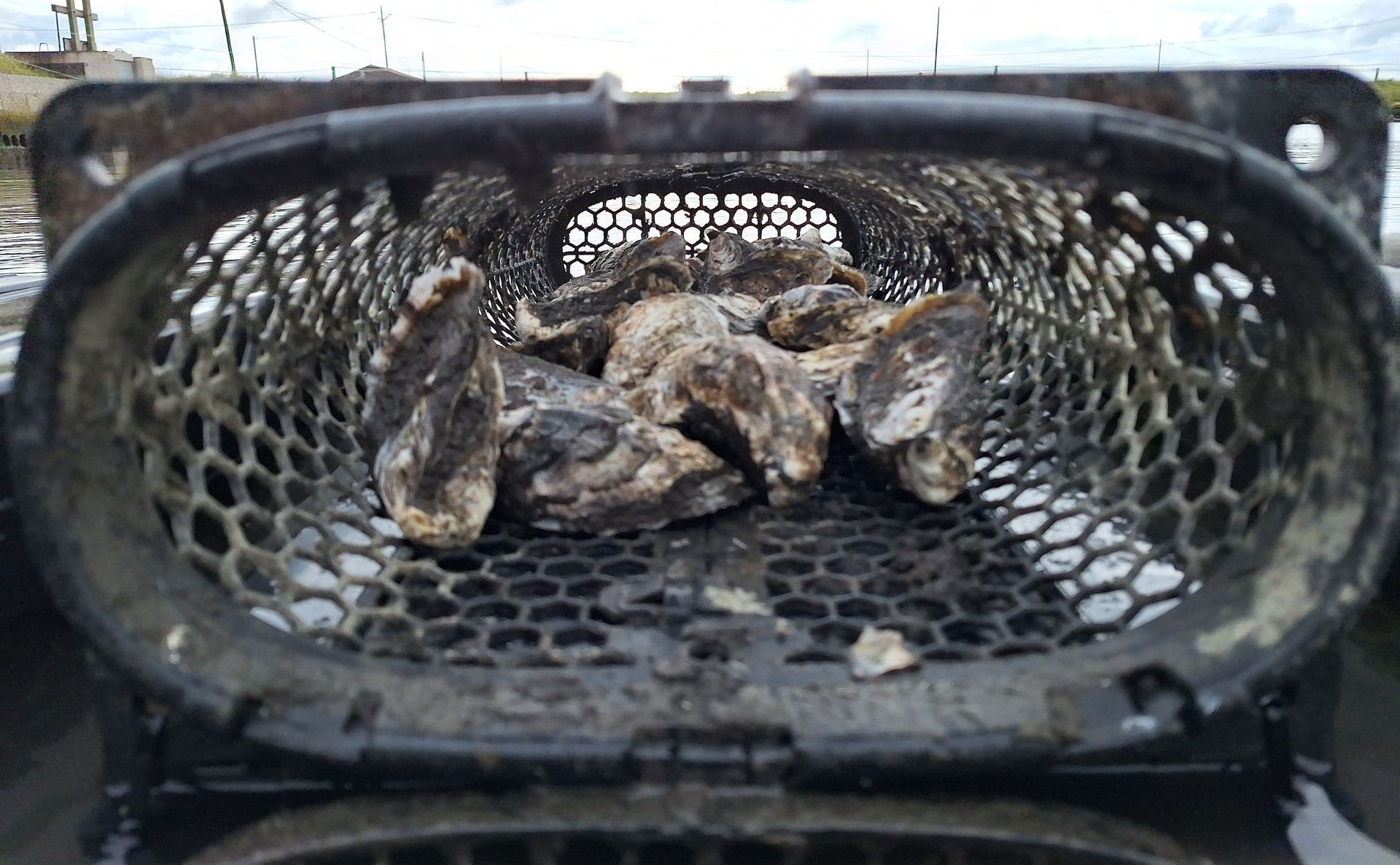
As the ergomarine oyster cage serves as a protection from predator fish, like dorada, the above floater where it hangs protects it from sun and keeps the tunicate where they most like to stay, by the surface, where fitoplancton and other suspended nourishment abound.

Tests go on, in order to evaluate the life cycle of this tunicata and possible additional revenue from higher added value markets.


Contact Us